“Is this stone original?” is the question I have heard most in fifteen years of buying, sorting and setting gemstones and pearls. It sounds simple. The honest answer depends on what the word “original” means, and that is where most buyers get confused.
The short answer: natural stones and pearls are formed by nature, cultured pearls are grown with human help, and imitations are made to look like the real thing. A certificate proves what a stone is, but only a trustworthy seller can tell you which one you are buying, and a good one will say so in plain words.
“Original” can mean four different things
When customers say original, they usually mean “not fake.” In the trade we separate it more carefully:
- Natural: formed in the earth (or, for pearls, in the sea or river) with no human involvement in making the stone itself.
- Treated natural: a natural stone that was heated, dyed, oiled or stabilised to improve colour or clarity. Most coloured gemstones on the market have had some treatment. It is accepted practice, as long as it is disclosed.
- Lab-created: chemically identical to the natural stone but grown in a laboratory. Real material, but not natural.
- Imitation: glass, plastic or a different cheaper stone dyed and sold as something else. This is what people fear when they ask if a piece is “original.”
So a better question to ask any seller is: “Is it natural, treated, lab-created or imitation?” A clear answer tells you a lot about the seller.
Pearls: natural, cultured and imitation
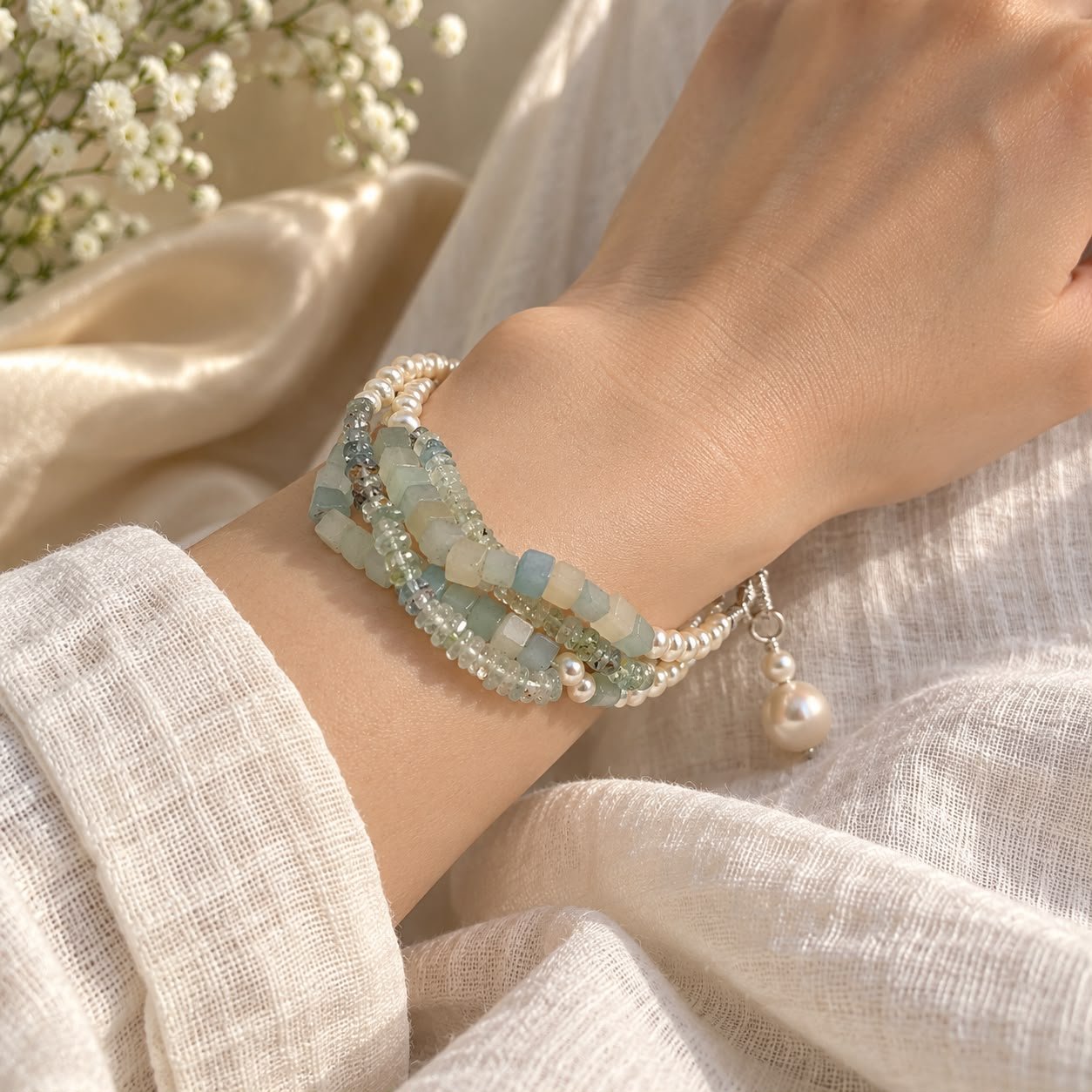
Truly natural pearls, formed without any human help, are extremely rare today and are priced like fine antiques. Almost all the real pearls you see in jewellery are cultured: a pearl farmer places a small nucleus or tissue piece inside a mollusc, and the mollusc then builds layers of nacre around it. The pearl is real, grown by a living creature, just not by chance.
Freshwater cultured pearls are the most popular choice for everyday silver jewellery because they offer real nacre, lovely shapes and soft colours at a fair price. Baroque pearls, the irregular ones, are not defects. Their uneven shapes are exactly what many people love about them. You can see both styles in our pearl necklaces, pearl earrings and pearl bracelets.
| Type | What it is | What to expect |
|---|---|---|
| Natural pearl | Formed by chance, no human help | Very rare, usually sold with lab reports, high price |
| Cultured pearl (freshwater or saltwater) | Grown in a mollusc with human help | Real nacre, slight variations in shape and size |
| Imitation pearl | Glass or plastic bead with a pearly coating | Perfectly uniform, smooth, often cheap |
Simple pearl checks you can do at home
- Feel: real pearls feel cool to the touch and slightly gritty when gently rubbed against the edge of a tooth. Imitations feel smooth and glassy. Please be gentle, and never try this on a piece you plan to return.
- Look at the surface: tiny natural ridges, small marks and slight differences from pearl to pearl are good signs. A string where every pearl is identical deserves a second look.
- Check the drill hole: in a real pearl, the edge looks clean with layered nacre. A coating that chips or peels around the hole points to an imitation.
- Judge the glow: real nacre has a soft depth, a lustre that seems to come from inside. Coated beads look flat and shiny on the surface only.
Gemstones: how to tell a natural stone
Natural gemstones carry the story of their formation. Look closely and you will often see tiny inclusions, colour banding or small variations in tone. Lapis lazuli has golden pyrite flecks and white calcite swirls. Malachite shows rippling green bands. Moonstone has its glowing, floating sheen. Amethyst can show uneven purple zoning.
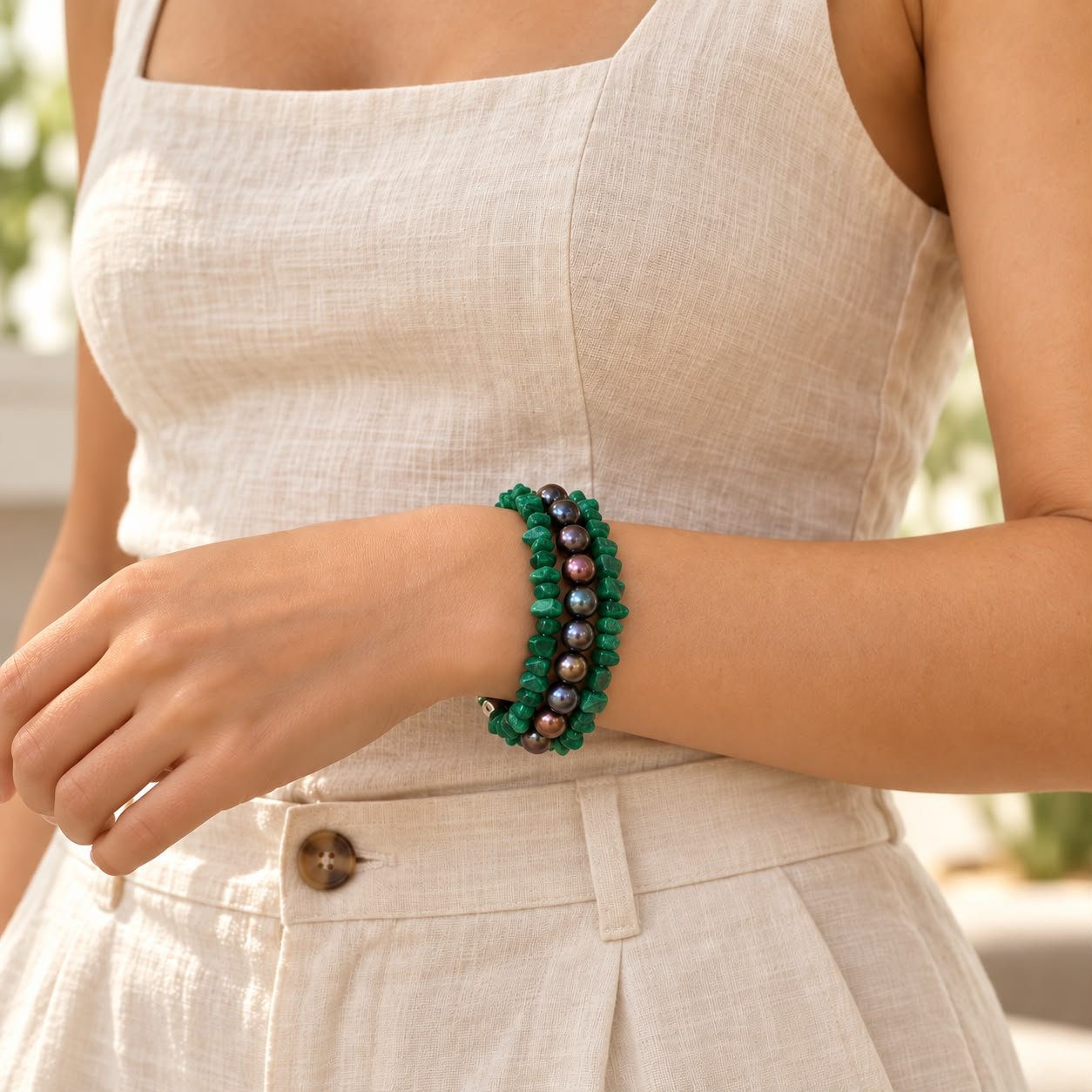
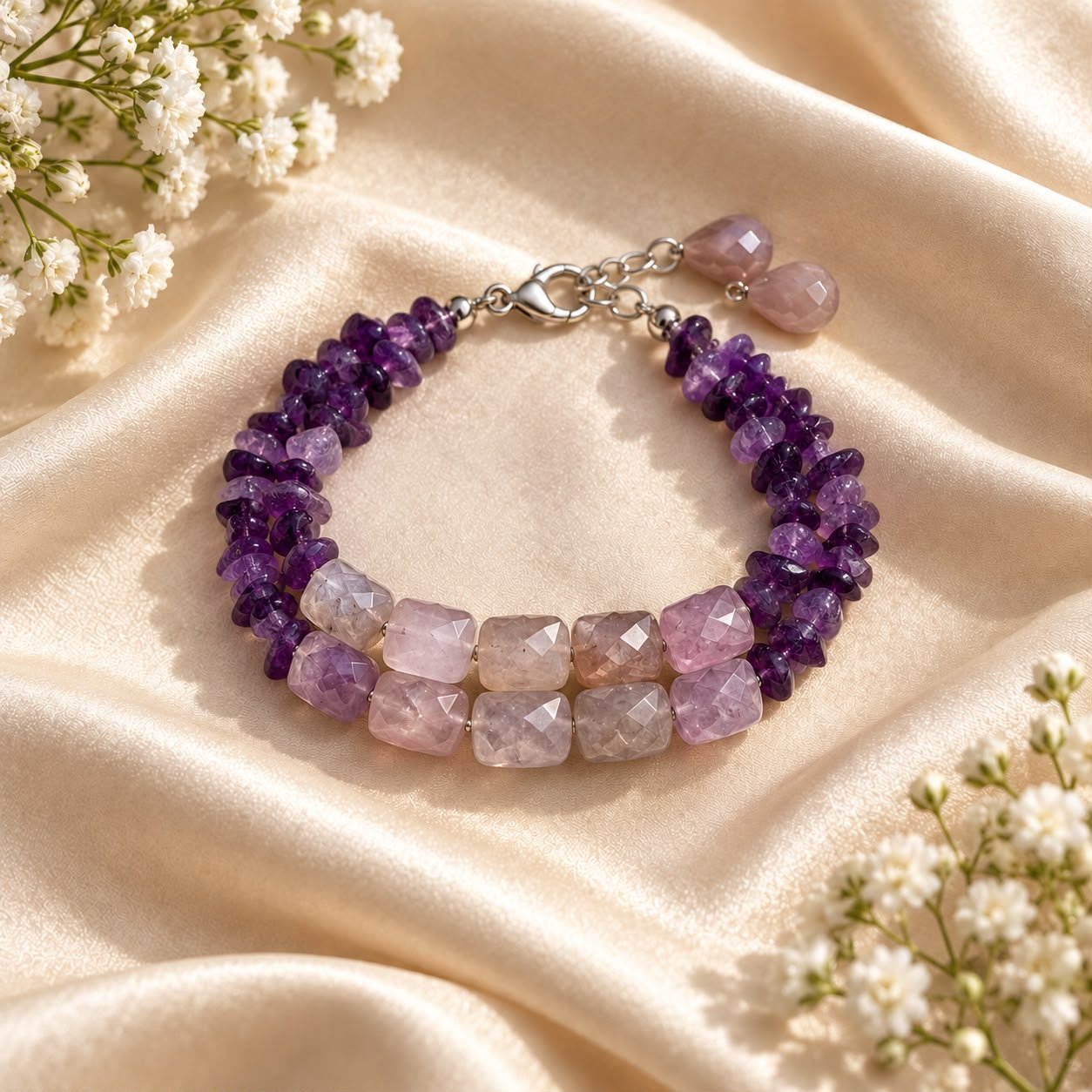
Imitations tend to look too perfect: flawless colour, no variation, and often a price that is too low to be believable. Glass can show tiny round air bubbles under magnification, and a natural stone usually feels cooler and heavier in the hand than plastic. Browse our stone bracelets and healing stones to see natural colour variation for yourself.
Treatments are common, so ask
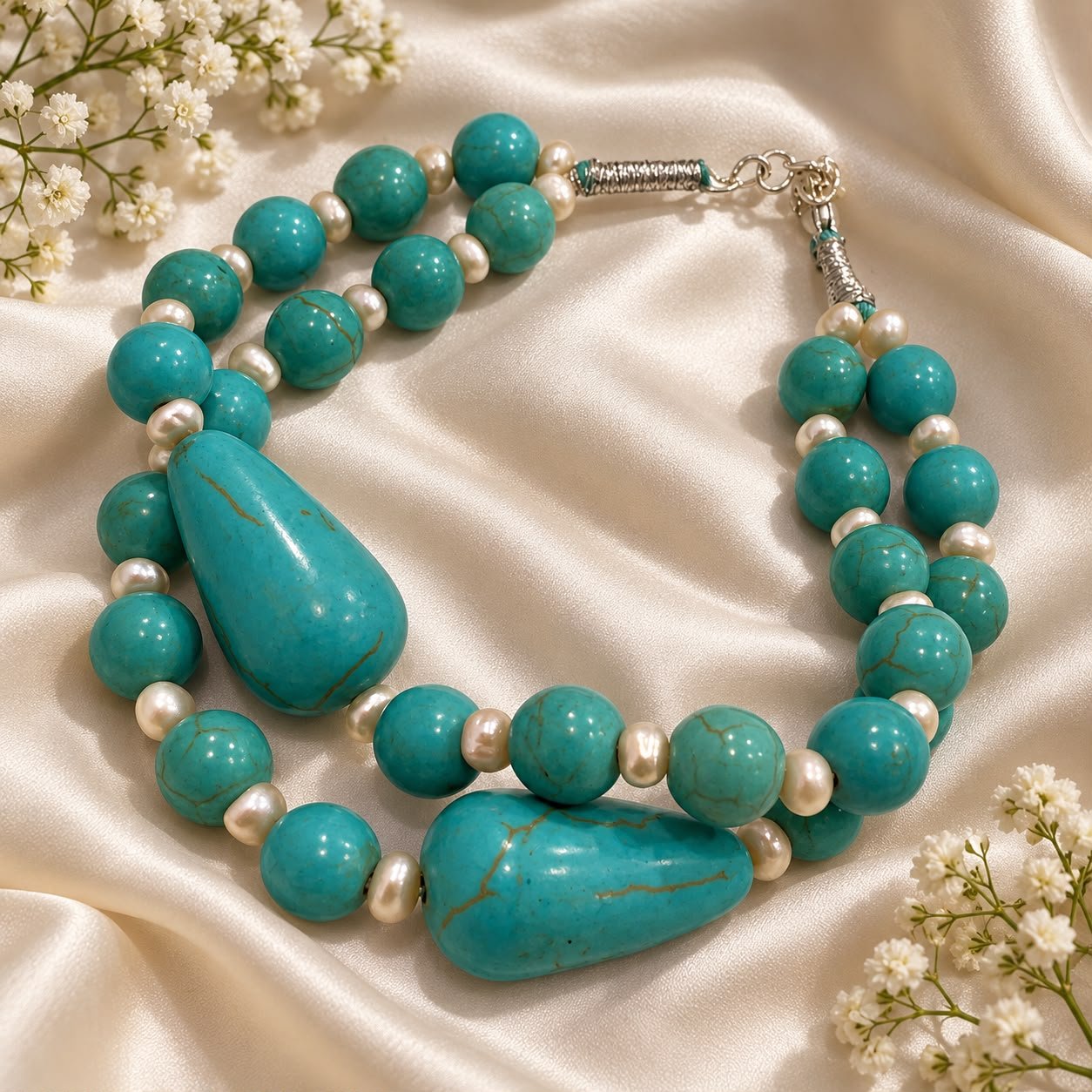
A few examples I see every week: amethyst and citrine are often heat-treated, turquoise is frequently stabilised so it does not crumble, and dyed howlite is regularly sold as turquoise. Treatment is not automatically a problem. A dishonest label is. If a seller cannot tell you whether a stone is treated, treat that as a red flag.
So, is a certificate necessary?
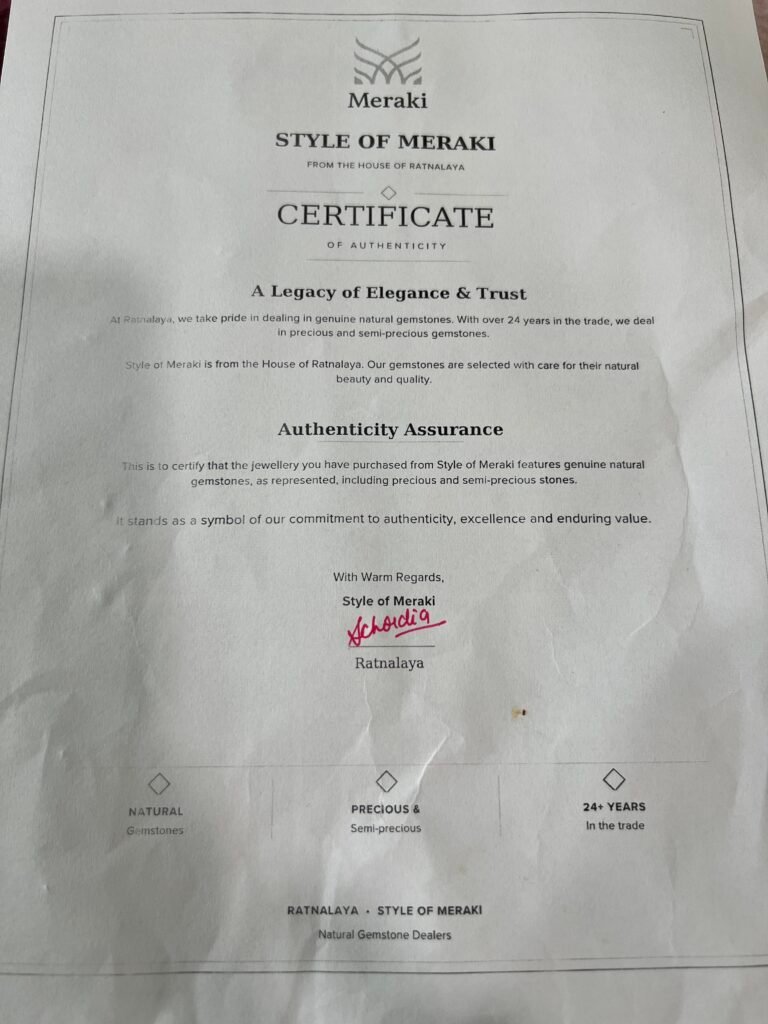
A gemstone certificate (also called a lab report) is written by an independent gemmological laboratory. It states what the stone is, whether it is natural or lab-created, and whether treatments are detectable. Recognised labs include GIA, IGI and, in India, GII.
Here is what I tell customers honestly:
- For high-value single stones such as a large ruby, emerald or diamond, a lab certificate is essential.
- For handcrafted silver jewellery with semi-precious stones and pearls, an individual lab report for every piece would often cost more than the stone itself. In this category, trust comes from a transparent seller, clear product descriptions, a visible 925 silver stamp and a fair return policy.
- A certificate is only useful if it matches the piece. Always check that the report describes the same stone you are buying.
How we approach this at Style of Meraki
Our collections are handcrafted in silver with natural gemstones and pearls, and we would rather explain our stones than make big promises about them. Every product page lists the stone used so you know what you are buying.
If you want a certificate for a custom piece, tell us before we start, and we will arrange it with you. You can read about how our custom process works, our return & exchange policy, our shipping details and our story, or reach us through the contact page.
Ask these five questions before you buy any gemstone or pearl jewellery
- Is the stone natural, treated, lab-created or imitation?
- If it is a pearl, is it cultured freshwater, saltwater or imitation?
- Is the metal 925 sterling silver, and is it stamped?
- Is a certificate available, and does it match this exact piece?
- What is the return or exchange policy if the piece is not as described?
See the stones and pearls for yourself
A few pieces from our collection that show the natural stones and pearls discussed above:
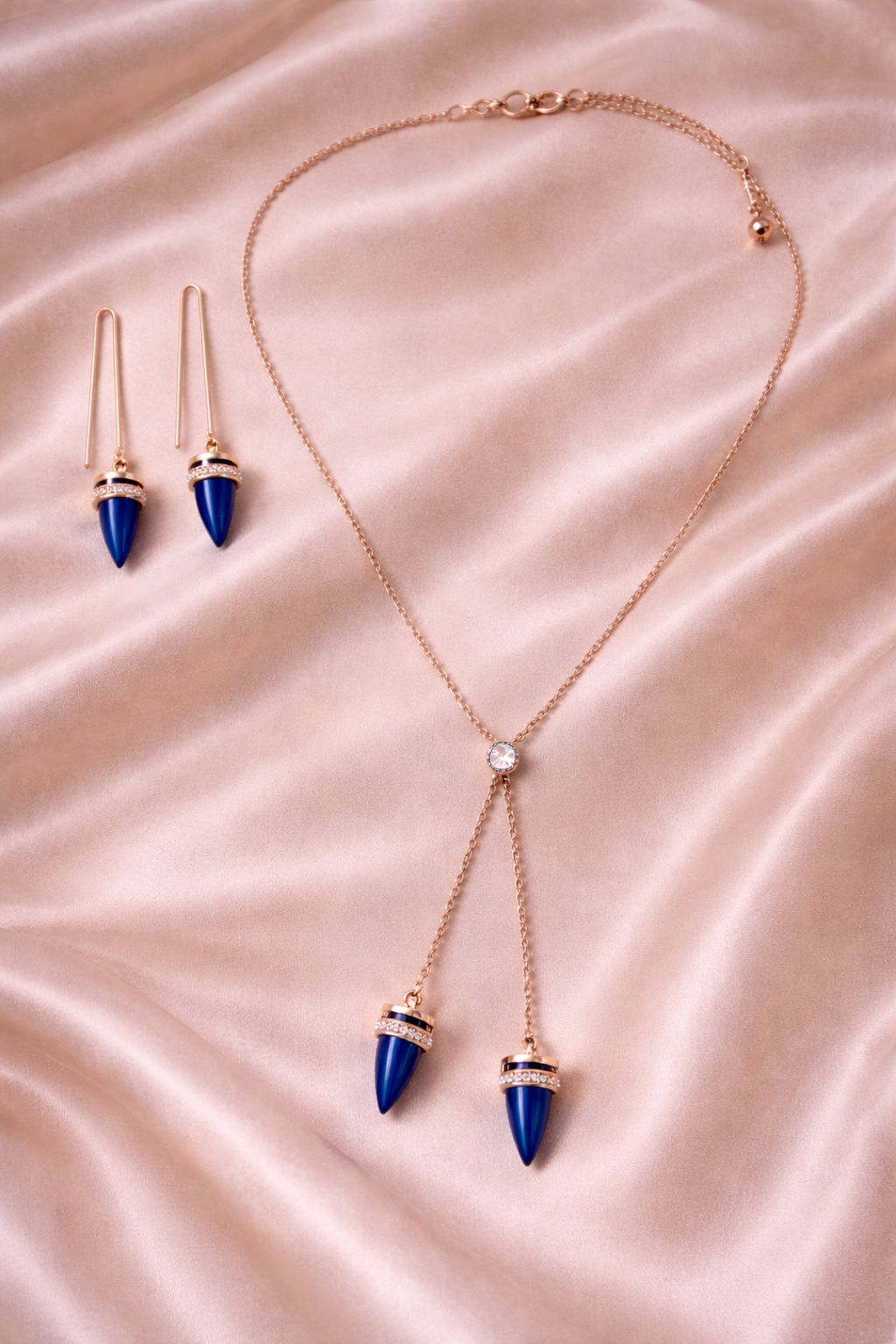 Lapis Lazuli Drop Lariat Set
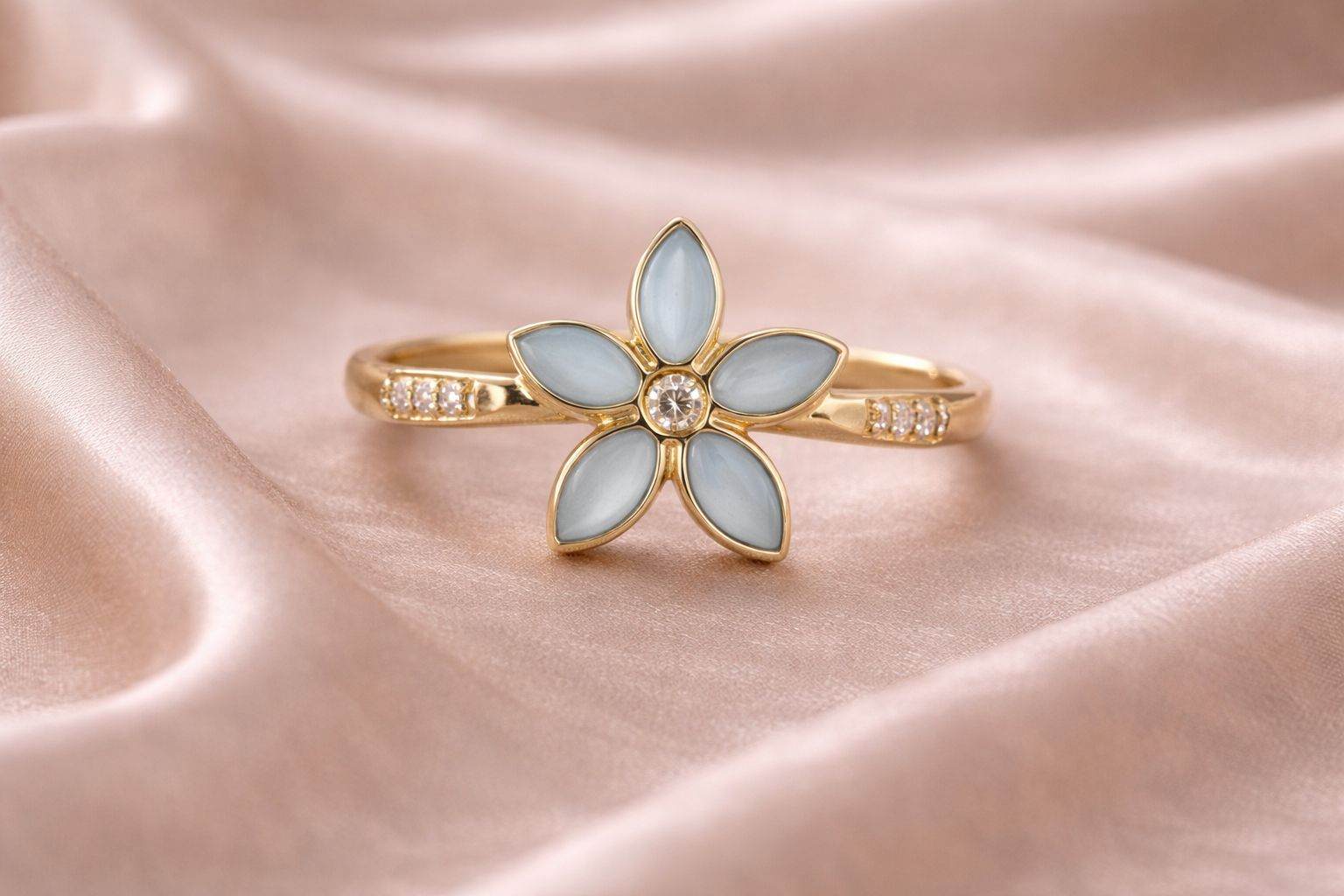 Floral Moonstone Ring
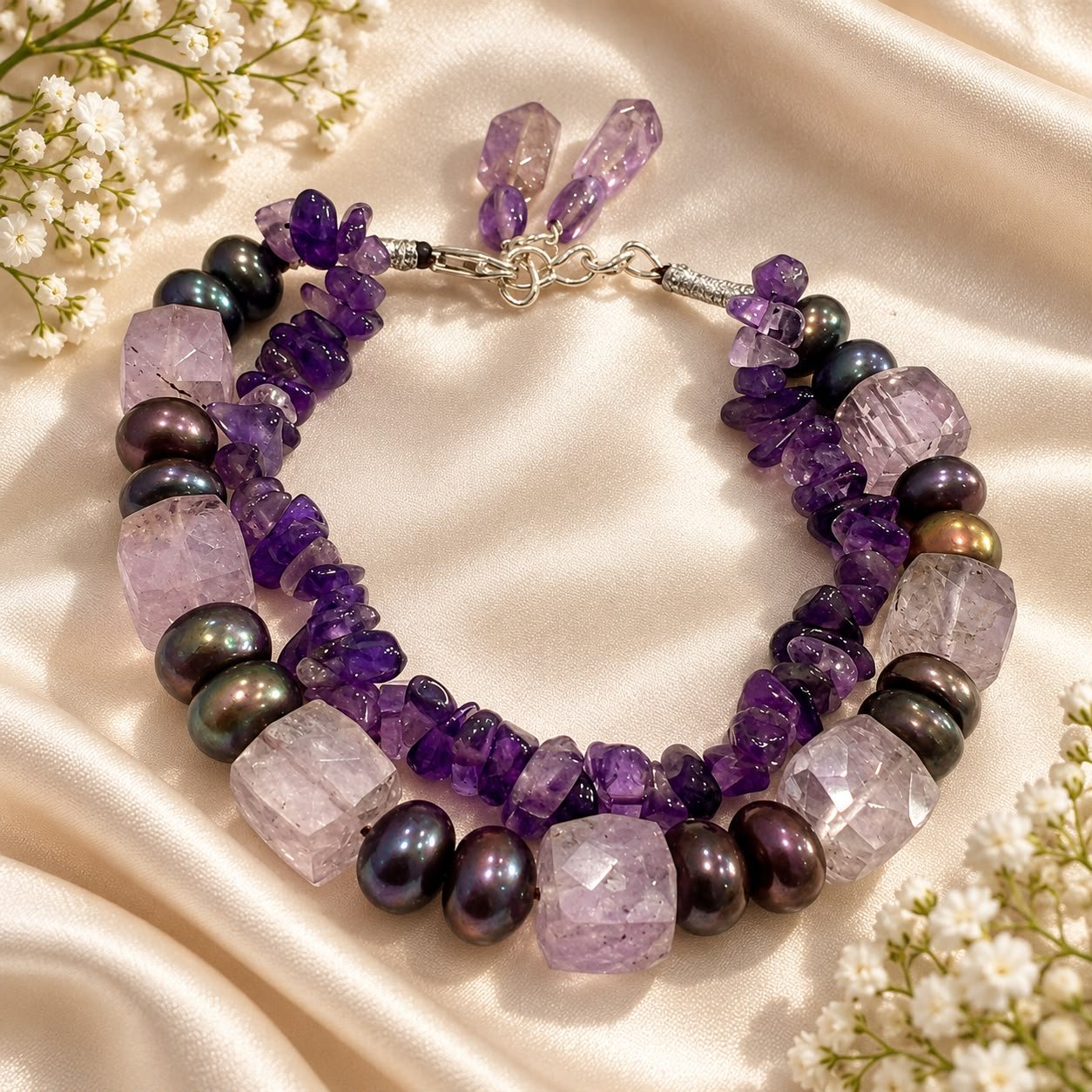 Amethyst & Black Pearl Bracelet
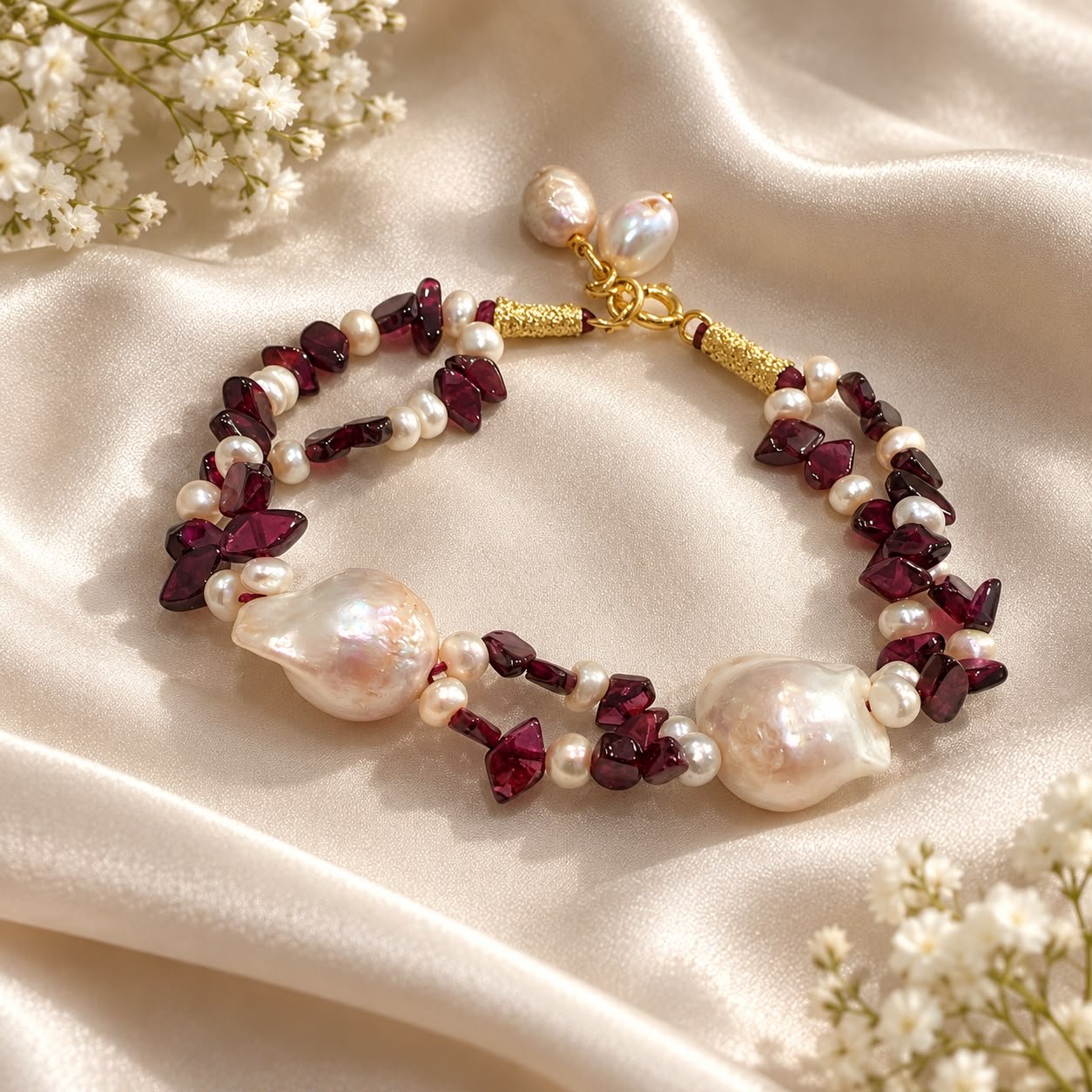 Garnet & Baroque Pearl
Frequently asked questions
Are cultured pearls “real” pearls?
Yes. A cultured pearl is grown by a living mollusc and made of real nacre. The only difference from a natural pearl is that people helped start the process.
Does treatment mean a gemstone is fake?
No. Treatments like heating or stabilising are common and accepted in the trade when they are disclosed. A stone is only misrepresented when the seller hides the treatment or sells imitation material as natural.
Can I test a gemstone at home?
You can do simple visual checks, such as looking for natural variation and inclusions, but they are not conclusive. For certainty, a gemmological lab or a qualified gemmologist can test the stone.
Will a certificate increase the value of my jewellery?
It confirms what the stone is, and for high-value stones it affects resale. For everyday semi-precious jewellery, the value comes mainly from design, craftsmanship and materials.
Have a question about a stone or pearl?
Message us on WhatsApp and we will tell you exactly what is in the piece you are considering, or help you design your own.
Chat on WhatsApp